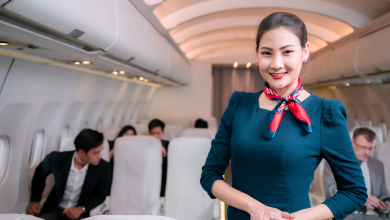
The flight attendant demonstrating the emergency exit procedure knows exactly how to handle an engine failure. The situation that once demanded little more than preparation is that of a passenger who is well into his third drink and refuses to wear a seat belt, going from irritated to screaming over the ocean without any hope of assistance beyond the plane’s cockpit. That is the situation that is now the exception rather than the rule, and airlines have been quietly adapting their training accordingly.
What Actually Changed After the Cabin Doors Closed
These statistics paint a more vivid picture than any viral video can possibly do. If in 2021 there was one case of unruly behavior on every 835th flight, in 2022 this number increased to one for every 568 flights, of which non-compliance alone increased by about 37% during one year. As for physical assault, it happens rarely, yet the number rose 61% during the same period to one case on every 17,200 flights. The latest industry statistics demonstrate a decline – from one for every 307 flights in 2024 to one for every 355 flights in 2025, but this figure is nothing compared to what we used to see a few years ago, and crew members pay the price for that gap.
Non-compliance with crew orders takes the lead among all the categories, followed by verbal abuse and intoxication. This statistic reveals quite an unpleasant side of what is happening since, most probably, it is not a random rude stranger who acts aggressively, but rather a passenger who decides to ignore the crew member’s order.
Checking the Terms Before Anything Escalates: Online Casino Promotions
There is something that the cabin crew picks up almost immediately – a sixth sense when it comes to assessing the situation and getting signs of an impending problem even before it occurs. The same sort of mentality of checking before committing applies in other situations too, for instance, looking at the fine print before you assume a promotion has all the benefits of the headline number. Lots of people enjoy themselves in casinos, and this logic is vivid here.
Sites like Casinos Analyzer can help you learn more about Mummys Gold, as well as lots of other casinos, which is a small version of the same due diligence – knowing what’s being agreed to before it’s too late to do anything but deal with the consequences.
Why This Became the Job Nobody Was Fully Trained For
It stems, in part, from factors beyond an individual passenger’s control: increased interconnectivity, delay issues, gate congestion, and general impatience. These issues are not unique to flying; they are evident in customer-facing roles across various industries. Airports have become busier, but most have not been able to keep pace with this growth in security and gate facilities. This means that the times when people tend to lose patience – boarding, delays, and tight connections – are made worse by airport congestion. Airports have tightened their alcohol policies because alcohol use is still a major cause of problems during flights.
Social media has also affected the incentive system, a point that is not often mentioned outright. Passengers who turn small problems into larger ones in order to be filmed have an audience ready on the other side of the video camera. The potential for a video to go viral alters the behavior of at least some people who would otherwise let things like flight delays or refusals slide. None of that makes the behavior okay. However, it does make clear why confrontation training has become part of the job.
The Guidance Written for the Job, Not Just the Uniform
A national workplace safety regulator defines workplace violence broadly enough to cover exactly what cabin crew increasingly deal with – not just physical assault, but intimidation, verbal abuse, and low-level threatening behavior that rarely gets logged as a formal incident even though it wears people down just as effectively. Specifically, its advice highlights employees who work without backup, on erratic schedules, or in circumstances where an irate member of the public can react with no place for the employees to run to – an apt description of a passenger cabin in flight.
On a larger level, the issue here, which the industry has yet to fully grasp, is that workplace violence isn’t some necessary evil of frontline customer service jobs; there is an obligation on the organization’s part to ensure its staff is prepared for it, instead of relying on staff to know how to deal with such situations, whether by nature or not. And indeed, that is the very change that has taken place over the last few years with regard to the training of cabin crew.
Building the Instinct Before the Flight Needs It
As a source such as CasinosAnalyzer regards “know the actual terms before signing,” the same baseline is established for how crews are trained to manage the cabin prior to any incident arising.
- Identify the subtle cues associated with an escalation – tone of voice, lack of compliance to instructions, fidgeting – before the situation becomes heated.
- Practice specific de-escalation tactics as opposed to general customer service training that is not designed for such confrontations.
- Identify the particular time when a situation needs to be escalated to the flight deck as opposed to making a decision based on each individual circumstance.
- Record all situations, regardless of how small they seem at the time, as patterns can only be recognized through the documentation.
- Debrief as a crew after an encounter, as opposed to brushing it off personally as if nothing happened.
What a Cabin Actually Looks Like Right Before It Tips
Tensions in a cabin usually do not come out of the blue; on the contrary, there is always a pattern to be observed before someone presses that red “call” button. There are some signs that a flight crew sees when a passenger is about to cause trouble.
- The passenger has already refused one order and is trying to see if he will be punished for the second one too.
- It is obvious that the passenger got drunk not on the board, but before the trip.
- Passengers’ fights involve others.
- He is talking loudly even though nothing has happened yet.
- There was an announcement regarding a delay, and several rows got affected right away.
All of the above are not guarantees of trouble; these are the patterns the crew members are taught to observe nowadays.
The Calm Was Always Being Managed, Never Assumed
Flight crews are trained to create an organized and controlled environment during flights. This is not due to a lack of conflict occurring at altitude, but rather because years of education were devoted to ensuring this would happen. The recent rise in conflicts during flights in recent years did not result in the development of this skill. It ensured that this training could no longer be considered elective and that crew members must possess these skills.