Are Cabin Crew Members Allowed to Use Their Phones During Flights?
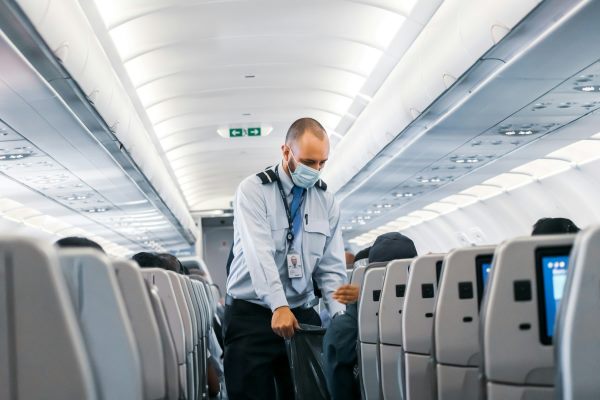
You’ve probably noticed the irony. A flight attendant walks down the aisle asking everyone to put their phones away, then disappears behind a curtain. What happens back there? Are they secretly checking Instagram while passengers obediently switch to airplane mode?
Not quite. The truth is cabin crew face much harsher phone restrictions than anyone sitting in economy. And breaking those rules can cost them their careers.
Forget What You Think You Know About Phone Bans
Most people assume phone restrictions on planes have something to do with cockpit interference. That explanation made sense back in the 1990s. Today? Not really. Aircraft manufacturers design planes to handle electromagnetic signals without breaking a sweat. Your phone isn’t going to crash the plane whether it’s in airplane mode or not.
So why do airlines still care so much about crew phone use? Because distraction kills. Not in some abstract, theoretical way but in a very real, documented way that keeps aviation safety experts up at night.
Flight attendants aren’t waiters who happen to work at altitude. They’re emergency responders who occasionally serve pretzels. Their eyes need to stay on the cabin constantly, watching for smoke, monitoring passenger behaviour, catching medical emergencies before they turn
critical. A phone vibrating in a pocket pulls attention away from all of that, even if just for a moment.
Every Airline Does It Differently
Some carriers don’t mess around. They collect phones at the crew briefing room and lock them up until the plane reaches the gate. Others figure their employees are adults who can manage to keep a phone in their bag for a few hours.
Whichever approach an airline takes, the penalties for violation tend to be steep. A crew member caught texting during boarding might receive a written warning. Get caught during an emergency situation? That’s potentially a firing offense. Regulators in both the US and Europe expect cabin crew to remain completely alert throughout flight operations, and airlines enforce this expectation aggressively.
The rules get even tighter during what the industry calls “sterile” periods. Taxi, take-off, initial climb, descent, landing – during all of these phases, crew members must be seated with their complete focus on safety. Phones don’t exist during these windows. Period.
What Happens on Those Brutally Long Flights?
Flying from London to Sydney takes roughly twenty-two hours with a stopover. Nobody expects a human being to stay sharp that entire time, which is why labour regulations mandate rest breaks for crew on extended routes.
Most long-haul aircraft have secret crew rest areas that passengers never see. These compartments, usually accessible through hidden staircases, contain small bunks where flight attendants can actually sleep during their breaks.
Phone rules tend to loosen up in these spaces. Airlines generally permit crew members to use devices in airplane mode while resting. Downloading a podcast or unwinding with some entertainment helps people recharge. It’s honestly not that different from passengers who spend layovers killing time online, maybe browsing travel deals or the latest promotions on NetBet before their connecting flight boards.
Once that rest period ends though, the phone vanishes immediately. Back to work means back to full attention.
The Customer Experience Factor
Airlines obsess over passenger perception, sometimes to an almost paranoid degree. And nothing destroys customer confidence faster than seeing a crew member staring at a phone screen.
Picture this scenario: you’re struggling to lift your bag into an overhead bin while a flight attendant three feet away scrolls through text messages. Doesn’t matter if she’s technically on break. Doesn’t matter if she just finished handling a difficult passenger situation. The optics are terrible, and airlines know it.
Billions get spent every year on branding, training, and service quality improvements. A single viral photo of a crew member on their phone can undo massive chunks of that investment overnight. Carriers simply refuse to accept that risk.
When Phones Actually Become Necessary
Genuine emergencies sometimes require crew members to pull out their devices. A passenger showing unusual symptoms might need those symptoms documented so medical professionals on the ground can diagnose remotely. Security situations occasionally require photographic evidence.
Beyond emergencies, many airlines now supply company-issued tablets. These look like regular devices but contain specialised apps for managing passenger information, safety checklists, and crew communication. They serve operational purposes only and come with their own usage restrictions.
The Honest Reality
Cabin crew accept significant lifestyle sacrifices that passengers rarely consider. Irregular schedules, time zone chaos, months away from family and yes, giving up phone access during work hours. It’s part of the job description.
That flight attendant reminding you to enable airplane mode isn’t being hypocritical. They’re actually held to a much higher standard than you are. Their phone stays buried in a crew bag while they spend the next several hours watching over a metal tube full of strangers.
Everyone lands safely, and nobody gets fired for checking their notifications. Seems reasonable enough.